
Oscar Lidenbrock (left) confessing in Penguinese to Gro, who had coincidentally worn her yellow dragon costume to work that day. March 2026.
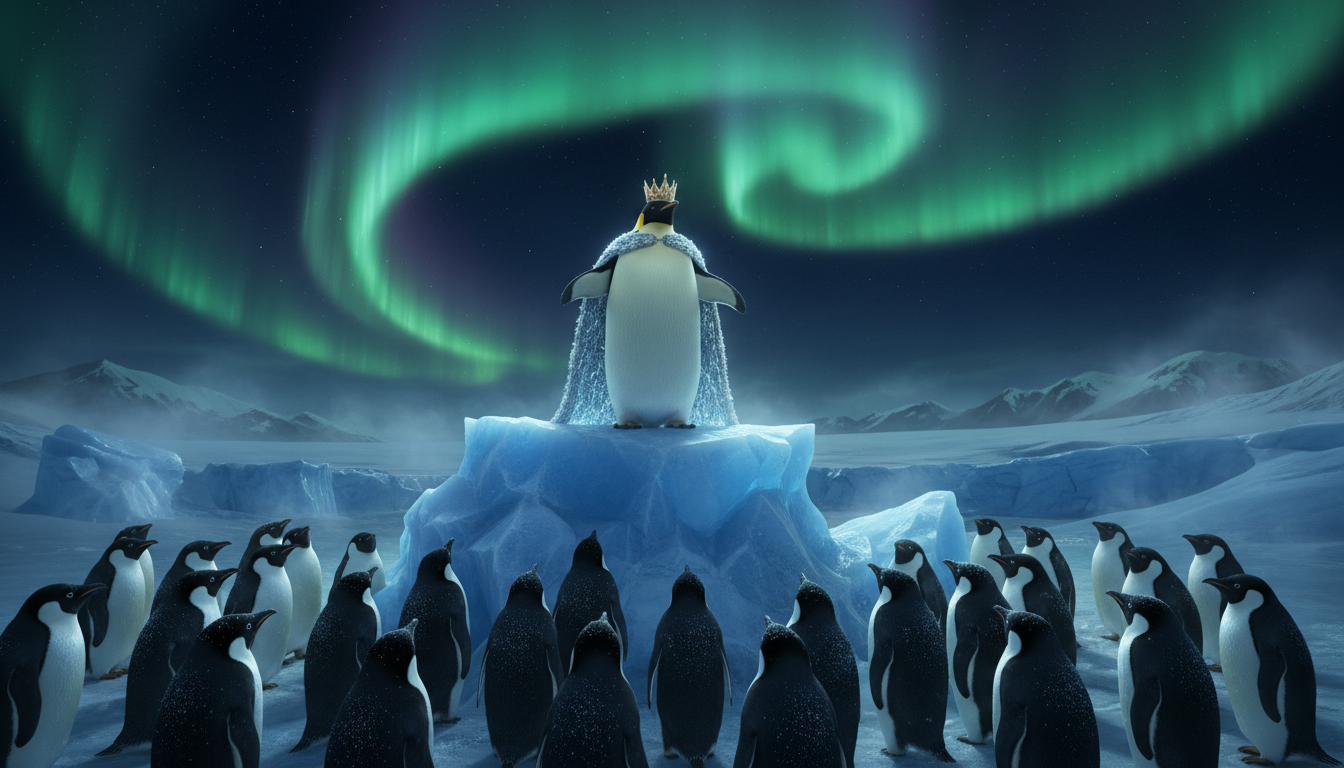
Advanced Certification Program
Kwaa'krik tchip-tchip prree!
Master the ancient tonal language of the Southern Colonies. From guttural belly-calls to the delicate crest-whispers — this is where fluency begins.
Unit I
Penguinese contains 37 distinct phonemes, 12 of which have no equivalent in any human language. Below are the critical sounds for advanced learners.

The Art of Beak Resonance
Penguinese phonetics rely heavily on beak shape, chest cavity resonance, and nasal passage modulation. Humans must use tongue placement and throat manipulation to approximate these sounds.
Mastering the 12 Untranslatable Sounds
Slow-motion beak demonstrations with IPA overlays. Includes the infamous 'Nrk' cluster drill.
Drill 1: The Kw & Tch Cluster
Colony Elder Brrip-tuk
/kʷ/
Labialized velar stop. Like 'qu' in 'queen' but sharper, produced with beak tension.
Example
Kwaa — Hello
/tʃʰ/
Aspirated palato-alveolar click. Tongue strikes roof of mouth with a wet pop.
Example
Tchip — Fish
/pr̥/
Voiceless bilabial trill. Air escapes through barely-closed beak, creating a purr.
Example
Prree — Love
/ɢʁ/
Uvular trill from deep in the throat. Resonates through the chest cavity.
Example
Grohk — Ocean
/bṛ/
Rapid retroflex trill. The tongue vibrates against the palate at high speed.
Example
Brrip — Danger
/skʷ/
Sibilant + labialized cluster. A hissing slide into the 'kw' sound.
Example
Skwee — Child
/ʒ̃/
Nasalized voiced fricative. Vibrates the nasal passage while exhaling.
Example
Zhuurp — Thanks
/fl̥/
Voiceless lateral fricative. A breathy, airy whisper-sound.
Example
Flii-ka — Beautiful
/nr̝k/
Nasal-trill-stop cluster. One of the hardest sounds for humans.
Example
Nuurk — Ice/Home
/ʍɹ/
Voiceless labiovelar approximant. A whistling 'w' with friction.
Example
Wraaah — No
/ʔ/
Glottal stop. Written as a hyphen. Brief, complete closure of the throat.
Example
Skwee-ik — Chick
/t̪k/
Dental-velar double stop. Two simultaneous closures — a beak specialty.
Example
Tuk-tuk — Hungry
Unit II
The essential 200-word lexicon of Penguinese revolves around ice, ocean, food, family, and survival. Here are the most critical entries for advanced study.

The Living Lexicon
Penguinese vocabulary is not static — new words emerge each breeding season through the song circles. The language has grown by approximately 3% per decade over the last century, primarily in emotional vocabulary.
📹 Video Lesson
Vocabulary in Context: The Fish Market Scene
Watch live colony footage with real-time translation. All 12 core words demonstrated naturally.
Essential Words 1–4
Greetings & Basics
| Penguinese | Meaning |
|---|---|
| Kwaa | Greeting / Hello |
| Tchip | Fish (generic) |
| Prree | Love / Deep bond |
| Nuurk | Ice / Home territory |
| Brrip | Danger / Predator alert |
| Skwee-ik | Child / Chick |
| Grohk | Ocean / Deep water |
| Pip-pip | Yes / Affirmative |
| Wraaah | No / Refusal |
| Flii-ka | Beautiful / Pleasing |
| Tuk-tuk-tuk | I'm hungry |
| Zhuurp | Thank you / Gratitude |
Unit III
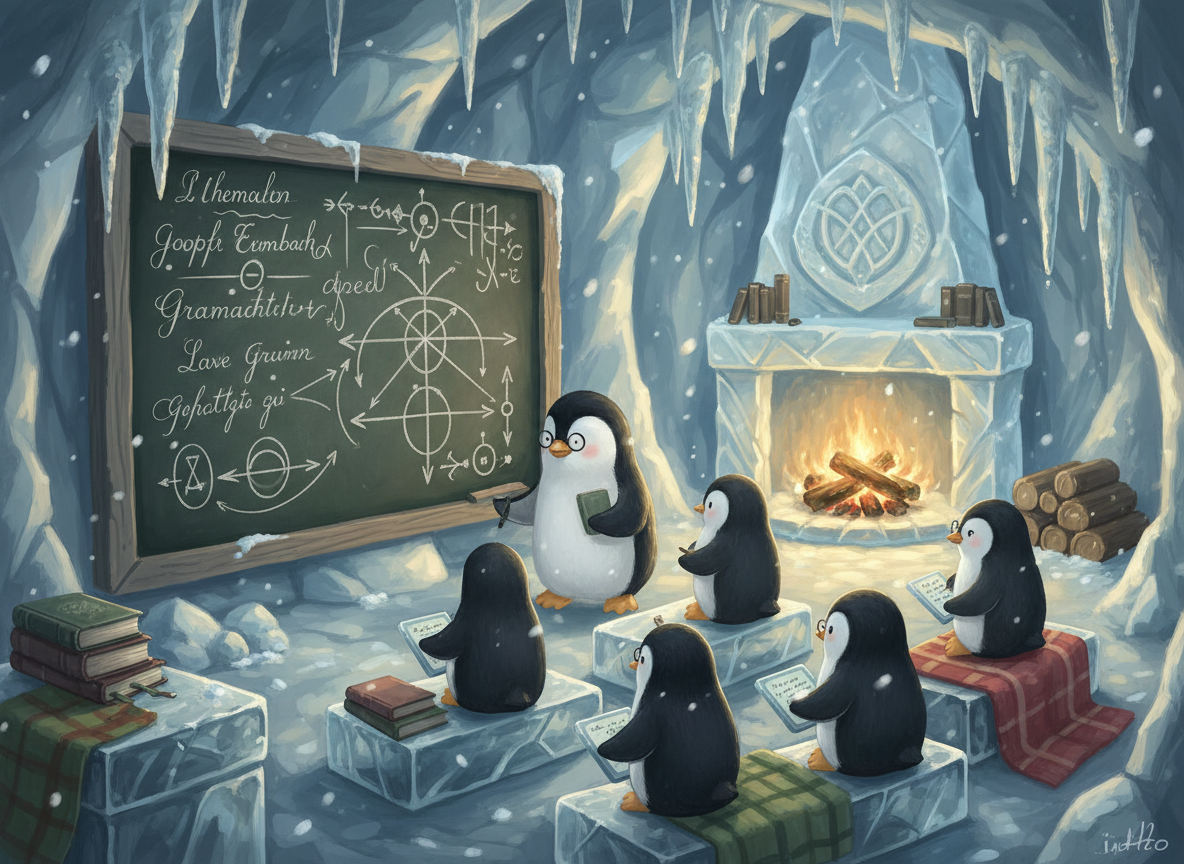
Penguinese grammar defies conventional linguistic categories. It integrates tone, body movement, environmental conditions, and communal context into a unified system.
Structure Beyond Words
Professor Kwaa-rik of the Southern Emperor Academy has documented over 200 grammatical rules, many applying only during blizzards, breeding season, or communal hunts.
📹 Video Lesson
Temperature Conjugation: A Deep Dive
Rare archival footage of the world's only known Penguinese grammar lecture, filmed at -42°C.
Tonal Inflection Sentences
5 sentences × 5 tones
Unit IV
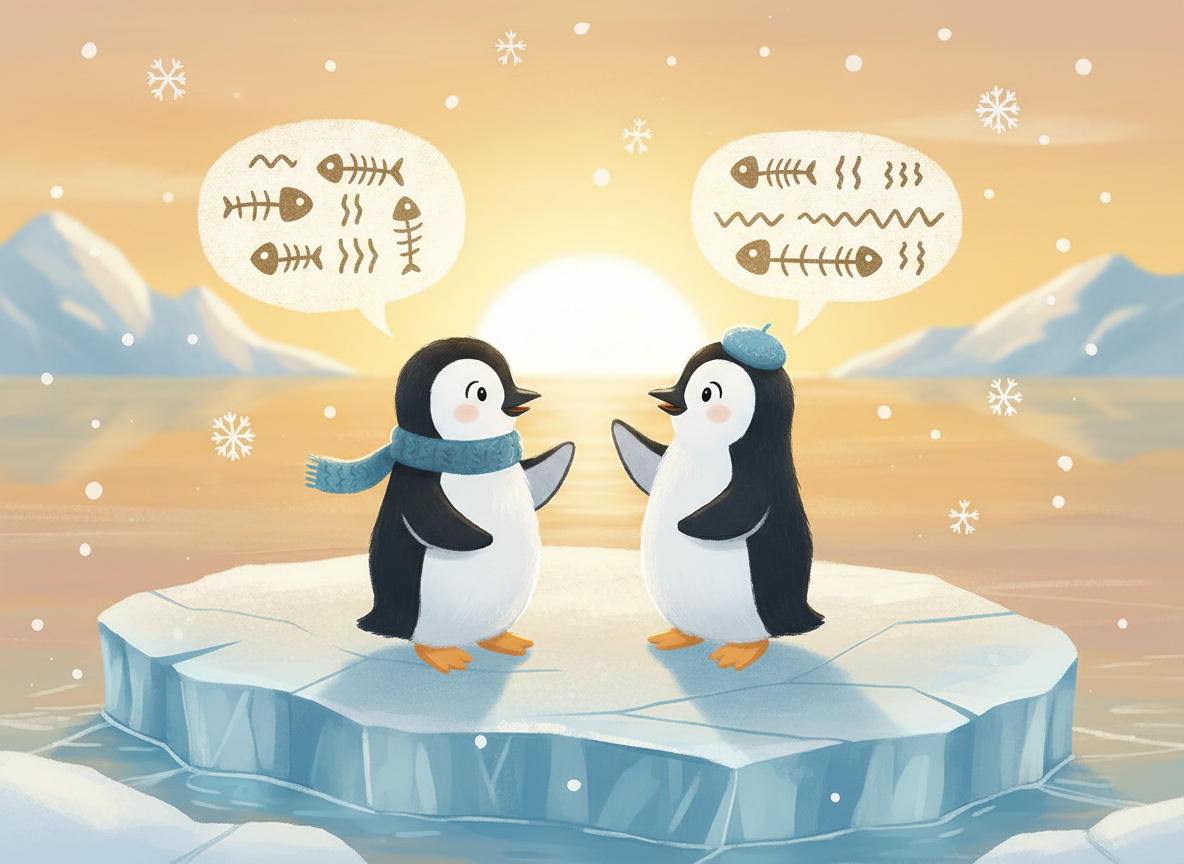
Practice with annotated dialogues drawn from real colony recordings. Each exchange demonstrates grammar, vocabulary, and cultural norms in context.
Dialogue as Ceremony
In Penguinese culture, conversation follows strict protocols. The elder or higher-status penguin always speaks first. Interrupting is not merely rude — it's a territorial challenge.
📹 Video Lesson
Full Colony Dialogue — Unscripted
Unscripted encounter between two colonies at a shared fishing ground. Subtitled with commentary.
Meeting a Stranger — Slow
Pause after each line
A
Kwaa↗! Nuurk-grohk zhuurp-ka?
Hello! From which ice-ocean territory do you come?
B
Kwaa↗ kwaa→. Nuurk prree-fli tukka.
Hello, listen well. My home is the warm-current territory.
A
Flii-ka! Grohk pip-pip skwee-ik?
Beautiful! Do your oceans have many chicks?
B
Pip-pip pip-pip. Skwee-ik tuk-tuk-tuk brrip [grohk-pause] nuurk.
Yes, yes. The chicks are hungry but danger has not reached our land.
A
Zhuurp prree. Tchip-rrk fli-grohk?
Thank you, dear friend. Shall we share a frozen ocean meal?
B
Pip-pip! Tchip prree zhuurp-zhuurp.
Yes! Eating together is love and deep gratitude.
Parent
Skwee-ik↗↘! Skwee-ik kwaa-kw!
My child! My own little one!
Chick
Pip-pip! Tuk-tuk-tuk...
Yes! I'm so hungry...
Parent
Tchip prree-ka. Grohk zhuurp fli-nuurk.
Here is love-fish. The ocean was generous and the ice was kind.
Chick
Zhuurp zhuurp! Prree↗↘.
Thank you, thank you! I love you. (with recognition tone)
Unit V
Language is inseparable from culture. Understanding these customs is essential for authentic communication — and for not accidentally starting a colony war.
When Words Aren't Enough
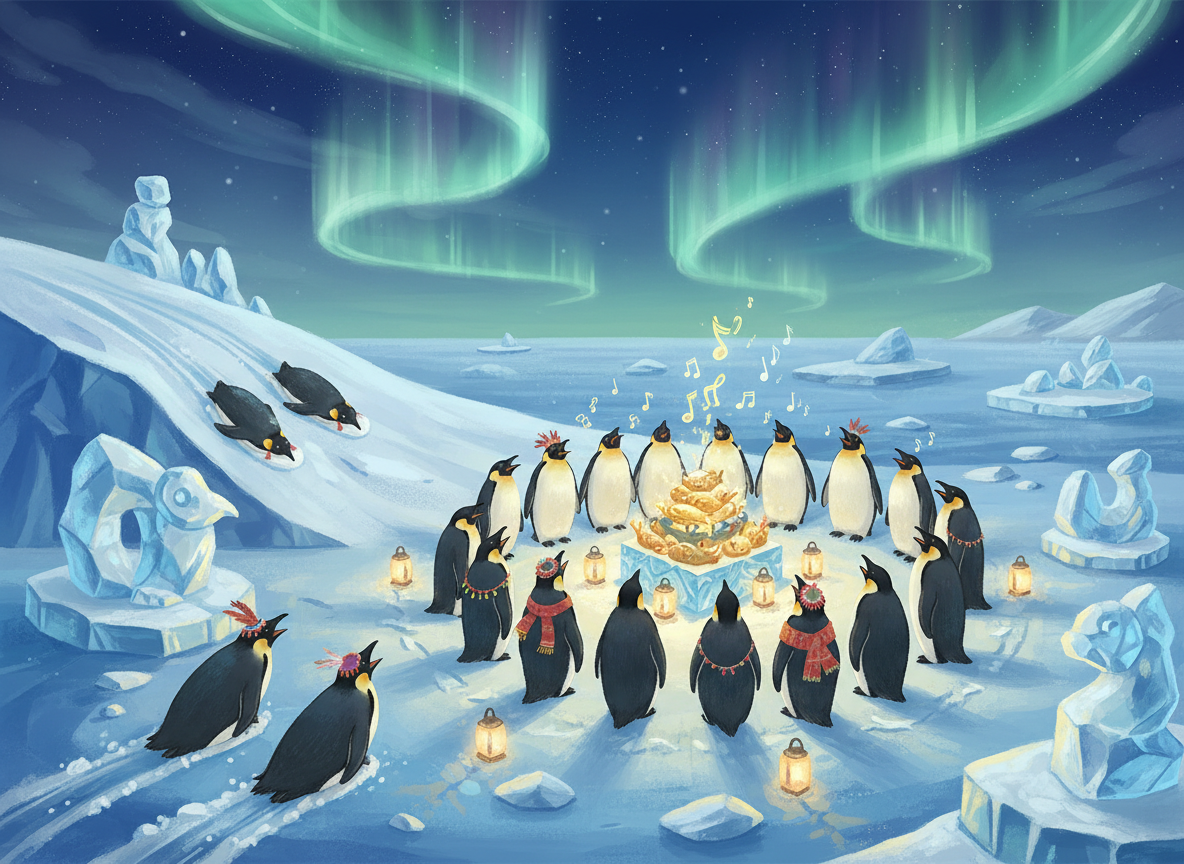
Much of Penguinese communication happens through ritual, shared silence, and physical proximity. A fluent speaker who ignores cultural context will always sound foreign.
📹 Video Lesson
The Evening Song Circle — Filmed at Dusk
36-minute documentary segment following one colony's nightly Grohk-prree ritual from start to close.
The Fish Offering Ceremony
Recorded at Cape Royds
When meeting someone for the first time, it is customary to present a small fish (real or symbolic). Refusing the fish — even politely — is interpreted as a declaration of territorial hostility. In modern Penguinese culture, a verbal 'tchip-zhuurp' (fish-gratitude) suffices.
Each colony gathers at dusk for communal singing called 'Grohk-prree' (ocean-love). These are not mere songs — they encode the colony's history, navigation routes, and genealogy. Missing three consecutive song circles results in social exile.
Never refer to melting ice directly. Penguinese has 47 euphemisms for 'melting' — using the literal word 'nuurk-wraaah' (home-destruction) is reserved for elders during ceremonial warnings. Casual use is considered catastrophically rude.
Each penguin develops a unique vocal signature by age two. Mates memorize each other's signature with such precision that they can locate their partner among 100,000 identical-looking penguins. This call is never written down — it exists only as lived sound.
When speaking to an elder, you must always face the ocean. When speaking to a chick, face inland (toward safety). Speaking to an equal allows any orientation. Getting this wrong suggests you don't know your place in the colony.
Latest Dispatch
Oscar Lidenbrock (left) confessing in Penguinese to Gro, who had coincidentally worn her yellow dragon costume to work that day. March 2026.
In what linguists are calling "the most romantically ambitious use of Penguinese by a non-penguin in recorded history," 25-year-old Oscar Nrk-enthusiast Lidenbrock reportedly approached his friend Gro outside the work library on Tuesday afternoon and delivered a full 47-second confession of love — flawlessly, in Penguinese.
"Kwaa↗ flii-ka. Prree↗↘ skwee-ik-kw zhuurp-zhuurp. Nuurk grohk pip-pip kwaa-kw."
Witnesses confirmed that Oscar maintained correct tonal inflections throughout, executed a textbook two-beat grohk-pause before the climactic verb, and — crucially — spread both arms outward at the exact moment the grammar required maximum wing-spread intensity. Léa, who does not speak Penguinese, described the experience as "confusing but somehow deeply moving."
Dr. Grohk-pip of the Antarctic Linguistic Institute, reached for comment, called the confession "grammatically impeccable" and noted that Oscar's possessive echo — reproducing Léa's hypothetical identity call from memory — was "the most tender use of the echo rule we have ever documented in a human." She added: "He even bowed his head toward the ocean. The man has studied."
Outcome
She said yes. Also: she is now enrolled in Beginner Penguinese.
Oscar is believed to be the first human to successfully use Penguinese in a romantic context. The Antarctic Linguistic Institute has nominated him for the annual Kwaa-rik Prize.